
What Is The Future Of Solar Energy Technician Jobs In The American Southwest ?
If you’re asking what is the future of solar energy technician jobs in the American Southwest, you’re asking the right question at the right time.
I’ve spent more than 15 years advising energy companies, workforce development programs, and contractors across the US. And if there’s one region where solar isn’t a “trend” but a structural shift, it’s the Southwest—Arizona, Nevada, New Mexico, Southern California, West Texas, and parts of Utah.
This isn’t hype. It’s math, policy, climate, and labor economics colliding.
Let me walk you through what’s really happening—and where most online articles miss the mark.
A Real-World Observation From the Field
About two years ago, I was working with a regional EPC (engineering, procurement, construction) firm operating solar farms in Arizona and New Mexico. Their biggest bottleneck wasn’t land, permits, or funding.
It was technicians.
They had projects approved and financed—but not enough qualified solar energy technicians to install, maintain, and troubleshoot systems fast enough to meet deadlines. Pay rates were rising, overtime was constant, and experienced techs were getting poached weekly.
That moment confirmed something I’d been seeing quietly for years:
the Southwest is heading into a long-term solar labor shortage.
Why the American Southwest Is the Epicenter of Solar Growth
The future of solar energy technician jobs in the American Southwest is tied to a few undeniable realities:
- Highest solar irradiance in the US
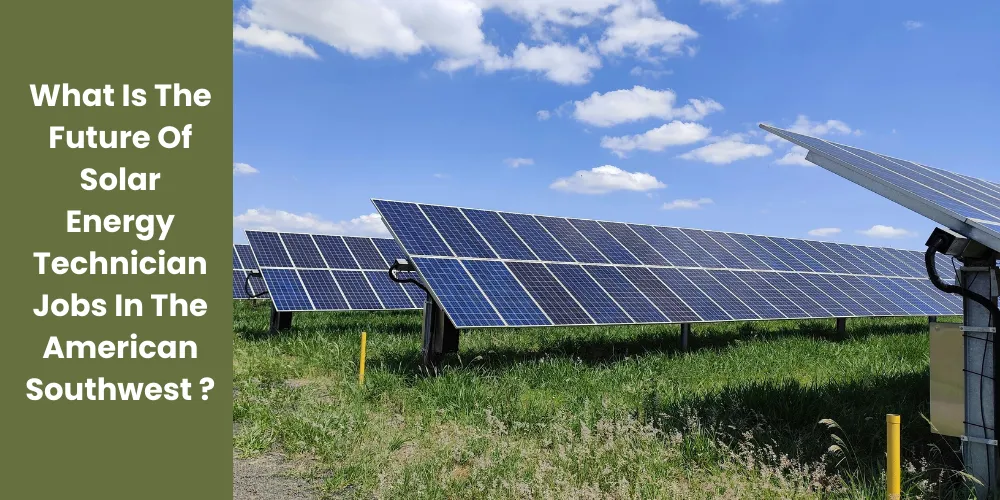
- Vast open land suitable for utility-scale solar
- Aggressive state-level renewable mandates
- Federal incentives accelerating deployment
States like Arizona, California, Nevada, and New Mexico are building solar capacity at a pace that outstrips the available workforce.
What Solar Energy Technicians Actually Do (Beyond Installation)
One major information gap online:
Most people think solar techs only “install panels.”
That’s outdated.
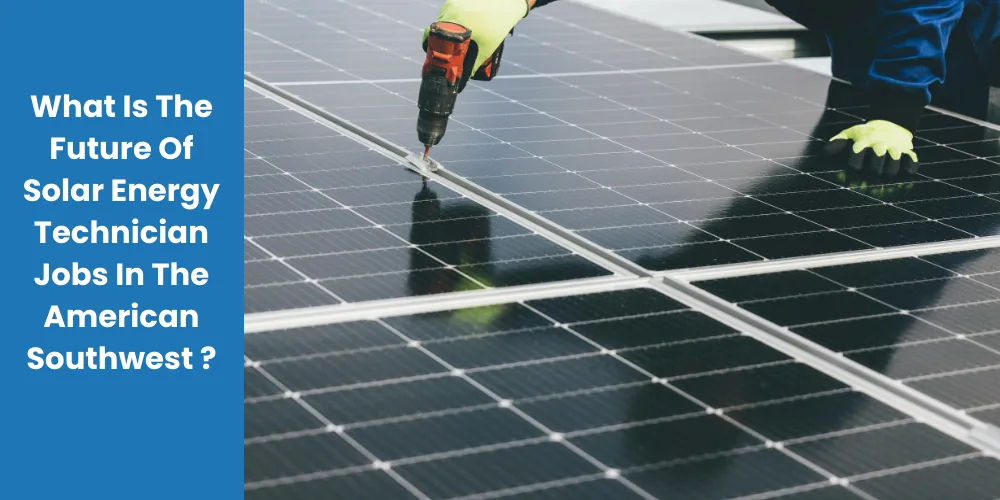
Today’s solar energy technicians in the Southwest work across:
- Utility-scale solar farms
- Commercial rooftop systems
- Battery energy storage systems (BESS)
- Grid interconnection & diagnostics
- Operations & maintenance (O&M)
- Inverter troubleshooting and data monitoring
As systems scale up, maintenance and performance optimization matter more than raw installation speed.
Expert Insider Tip #1
The fastest-growing roles aren’t entry-level installers—they’re technicians who understand inverters, monitoring software, and energy storage systems.
What Is the Future of Solar Energy Technician Jobs in the American Southwest? (The Big Picture)
Short Answer:
Strong growth, rising wages, and increasing specialization for at least the next 15–20 years.
Longer Answer:
Solar technician jobs are shifting from “manual labor + basic wiring” to skilled technical careers tied to grid stability and energy resilience.
Key drivers include:
- Utility-scale solar expansion
- Battery storage integration
- EV charging infrastructure
- Grid modernization
- Federal clean energy funding
Job Growth & Wage Outlook (Southwest Focus)
Here’s a simplified snapshot of where the market is heading:
| Role Type | Demand Trend | Skill Level | Pay Trajectory |
|---|---|---|---|
| Entry-Level Installer | Stable | Low–Medium | Moderate |
| Solar O&M Technician | High | Medium | Rising |
| Inverter Technician | Very High | Medium–High | Strong Growth |
| Solar + Storage Tech | Exploding | High | Premium |
| Lead / Field Supervisor | High | High | Top Tier |
This is why the future of solar energy technician jobs in the American Southwest looks very different from five years ago.
The Skills That Will Matter Most (Not Just Certifications)
Certifications help—but employers in the Southwest prioritize hands-on capability.
High-value skills include:
- Electrical troubleshooting
- Inverter commissioning
- SCADA and monitoring platforms
- Battery storage systems
- OSHA & utility safety protocols
- Heat-environment field experience (huge in the Southwest)
Expert Insider Tip #2
Technicians who can work comfortably in high-heat, remote solar farms with minimal supervision command higher pay and faster promotions.
The Role of Federal Policy (And Why It Matters to Technicians)
The Inflation Reduction Act (IRA) and related clean energy programs aren’t just about carbon reduction.
They:
- Incentivize domestic solar production
- Expand utility-scale solar
- Fund grid-scale storage
- Encourage long-term O&M contracts
This creates decade-long job stability, not boom-and-bust cycles.
That’s a key reason the future of solar energy technician jobs in the American Southwest is unusually resilient.
Common Pitfalls & Warnings
What Aspiring Solar Techs Should NOT Do
- Don’t assume short-term training equals long-term job security
→ Entry-level roles are easiest to replace. - Don’t ignore electrical fundamentals
→ Solar is becoming more electrical and less mechanical. - Don’t limit yourself to rooftop-only experience
→ Utility-scale experience pays more and lasts longer. - Don’t underestimate heat, travel, and physical demands
→ Burnout is real if expectations aren’t realistic.
Following outdated advice can trap you in low-wage roles while the industry moves on.
Where Most Articles Get It Wrong (The Information Gap)
Most content focuses on:
- Installation volume
- Entry-level job counts
- Generic national averages
What they miss:
- O&M and diagnostics roles are growing faster
- Solar + storage hybrid skills are rare
- Southwest technicians face unique environmental and grid challenges
- Long-term career ladders now exist (lead tech → supervisor → asset manager)
Expert Insider Tip #3
If you want longevity, build skills that keep systems running, not just installed.
Are solar energy technician jobs stable in the Southwest?
Yes. Utility-scale solar and long-term maintenance contracts create sustained demand.
Do solar technicians need college degrees?
Not usually. Technical training, electrical knowledge, and field experience matter more.
Which Southwest states have the best solar technician job prospects?
Arizona, California, Nevada, New Mexico, and West Texas consistently lead demand.
Will automation reduce solar technician jobs?
Automation reduces manual installation—but increases demand for skilled diagnostics and maintenance technicians.
Final Thoughts on the Future of Solar Energy Technician Jobs in the American Southwest
So, what is the future of solar energy technician jobs in the American Southwest?
It’s not disappearing.
It’s not peaking.
It’s evolving into a skilled, technical, and increasingly well-paid career path.
For people willing to build the right skills—especially in electrical systems, storage, and diagnostics—the Southwest isn’t just a good place to work in solar.
It’s the best place in the country to build a long-term solar career.